A year ago, many organisations thought (OK, very much hoped) 2025 would be the year things settled.
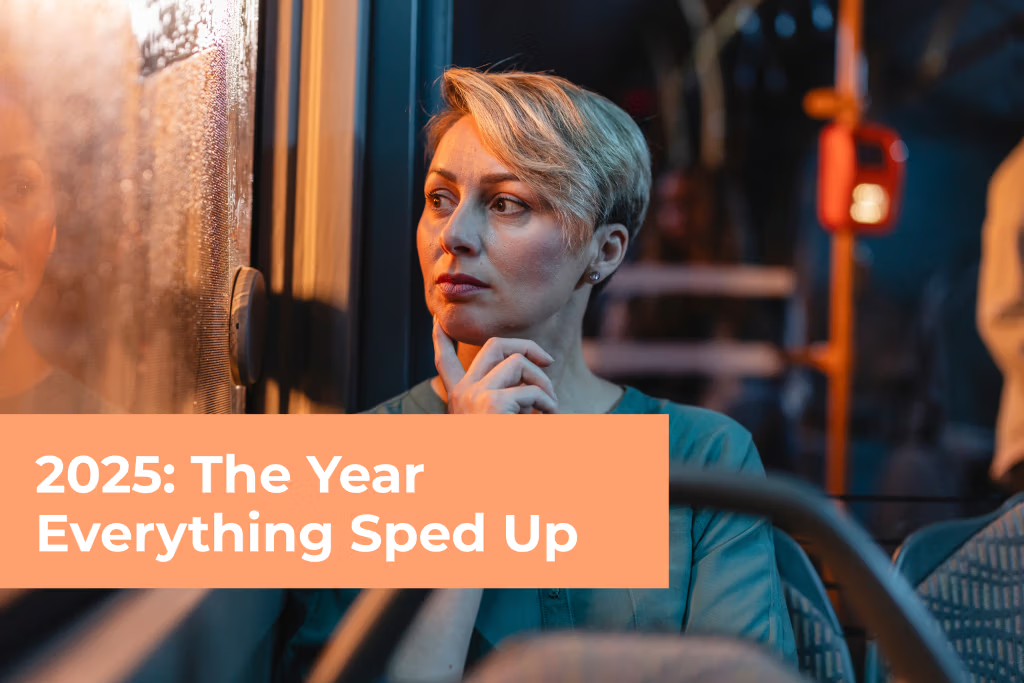
Instead, it became the year everything sped up.
At the end of 2024 and into early 2025:
- AI was moving from experiment to common practice, with 78 percent of organisations adopting AI in at least one business function in 2025 according to McKinsey-based analyses, compared with 55 percent in 2023.
- Economic uncertainty was dominating board conversations, with cost pressure sitting awkwardly alongside growth targets.
- Employment reform was looming in the United Kingdom, but clarity was thin on what would actually land.
- Hybrid working was no longer new, but still far from stable.
- And globally, the political backdrop shifted again as Donald Trump prepared to return to office.
Underneath all of that, managers were already stretched.
Many organisations hoped (really hoped) 2025 would be a year of settling.
That things would stabilise.
That pressure would ease.
It did not.
Fast forward a year and the opposite happened.
Expectations sharpened.
Roles shifted faster than frameworks could keep up.
And the cracks in how work actually operates became impossible to ignore.
This time last year I was deep in conversations about workforce development and what organisations would need to change.
Not in theory.
In reality.
Over the next couple of weeks, I am going to revisit those workforce trends with the benefit of hindsight.
What 2025 confirmed.
What accelerated faster than expected.
What we underestimated.
And where organisations are now paying the price for issues that were quietly building.
If you work in HR, manage people, or shape workforce strategy, this will probably feel familiar.
Is your 2026 strategy backed by data?
This post is just the beginning of our deep dive into the shifts shaping the modern workplace. To see the full research and the 5 key signals we’ve identified, [download our comprehensive 2025 Trend Report here].